

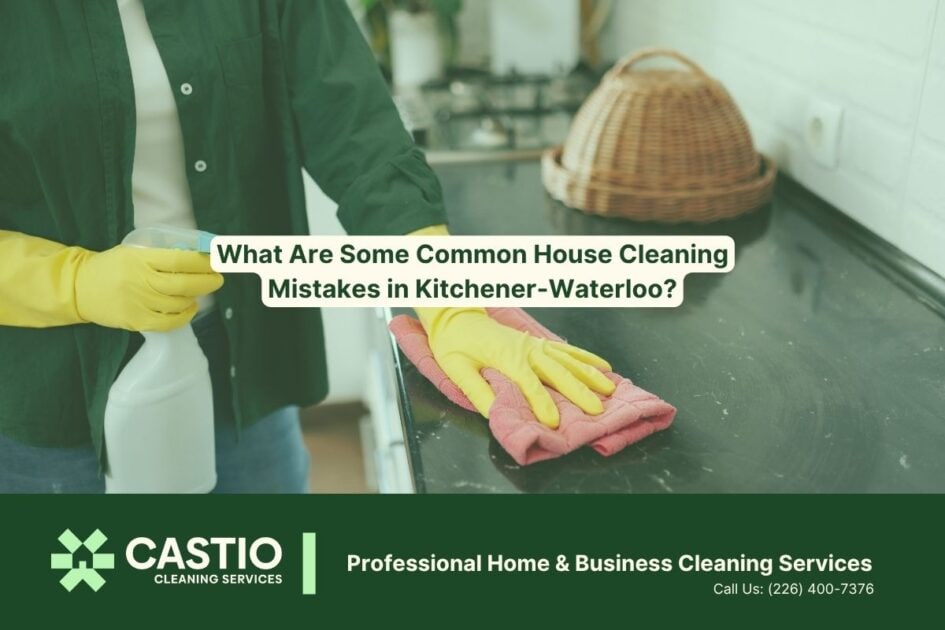
Short answer first. The most common house cleaning mistakes are using acidic cleaners on natural stone, mixing products that turn toxic, steam-mopping hardwood, scrubbing stainless steel with steel wool, swapping cloths between rooms, and wiping disinfectant off before it works. Every one is easy to make. Most cost real money to undo.
We see it constantly. Someone reaches for an acidic cleaner, wipes down their marble, and thirty seconds later, the damage is done. It does not come out. Repolishing or replacing that stone runs from a few hundred dollars to several thousand.
That is the pattern with cleaning mistakes. The product costs five dollars. The repair costs a fortune.
Castio Cleaning Services cleans homes across Cambridge, Kitchener, Waterloo, and Guelph. We have seen these mistakes across 400-plus homes in the past 18 months. Etched countertops. Warped floorboards. Scratched appliances that looked fine that morning. Almost all of it was avoidable.
Here is what does the most damage, and how to stay clear of it.
| Mistake | Cost to fix (CAD) | Time to ruin it |
| Acid on marble or limestone | $2,000 to $5,000 | 30 to 60 seconds |
| Steam mop on hardwood | $1,200 to $2,250 | 2 to 3 uses |
| Steel wool on stainless | $200 to $800 | one wipe |
| Mixing the wrong chemicals | a hospital trip, or worse | seconds |
Home insurance rarely covers cleaning damage. Worth remembering before you experiment.
Grabbing the Wrong Cleaner for the Surface
Wrong product, wrong surface. That is where most permanent damage starts. And it costs far more than buying the right thing in the first place.
Acidic Cleaners on Natural Stone
Vinegar sits around pH 2.4. Very acidic. Lemon juice is right there with it. So are most bathroom cleaners. All of them etch marble and other soft stone, dulling the polish in minutes and leaving patches that look like water marks but never wipe away.
Plenty of popular store cleaners are acidic too, even the ones sold as heavy-duty. Same result. Light etching sometimes comes back with professional polishing. Bad etching means a new countertop.
Use a pH-neutral stone cleaner instead, or a few drops of dish soap in warm water. Test anything new on a hidden corner first and wait a day before you trust it.
Mixing Products That Turn Toxic
Never mix cleaning products. Some combinations become a gas that sends people to the hospital.
The dangerous ones:
- Bleach and ammonia cleaners, like glass cleaner
- Bleach and vinegar
- Hydrogen peroxide and vinegar
- Two different bathroom powders or sprays together
People do this thinking more product means more cleaning power. It does not. It just makes poison. Use one thing at a time. Rinse with plain water between products, and give it a few minutes before switching. Mix something by accident, and you should leave the room and call Poison Control at 1-844-764-7669.
Going Too Strong on the Concentrate
Concentrated cleaners need diluting for a reason. Full strength, they strip the finish off wood and leave a sticky film on floors that grabs dirt and never lets go. Stripping that film back off costs more than the cleaner ever saved you.
Read the dilution ratio. Follow it. Cleaning works through the right chemistry and a bit of contact time, not raw strength.
Damage That Comes Down to the Surface
Some surfaces punish the wrong approach hard and fast. Stone, wood, and stainless steel top the list.
Why Marble Etches and Granite Stains
Marble is mostly calcium carbonate, which reacts with acid the way baking soda reacts with vinegar. A splash of wine or citrus juice leaves a permanent dull mark within a minute or two. Granite holds up to acid much better, since it is built from quartz and feldspar. The catch is the sealer on top. Acidic cleaners wear it down, and once that protection is gone, the stone stains and dulls too. Either way, the rule is the same. Keep anything acidic off the counter.
Light damage sometimes polishes out. Deep etching means grinding the surface down or replacing it, and that gets expensive fast.
Stick to a stone-safe cleaner that keeps the factory finish. Nothing acidic, ever.
Water Damage on Wood Floors
Hardwood warps when water works its way between the boards. Engineered floors with a thin top layer are worse. Steam mops are the usual culprit. They drive hot vapour down between the seams, and after a couple of uses, the boards start to cup and stain.
Refinishing a cupped floor runs into the thousands for an average room. Deep water stains go right through the wood and only come out if you sand back to bare timber.
A barely-damp microfibre mop is all you need. Light moisture that dries in under a minute, not a flood of steam.
Scratches on Stainless Steel You Cannot Buff Out
Steel wool, abrasive pads, and scouring powder all scratch stainless steel for good. The scratches are permanent, and steel wool leaves behind tiny iron particles that rust into orange spots. Grease and fingerprints catch in the marks from then on.
Refinishing a panel is pricey. A badly scratched fridge door sometimes means ordering a whole new one.
A soft microfibre cloth handles it, wiped with the grain. For tough marks, a gentle non-abrasive cleanser.
Safety and Cross Contamination Mistakes
This is where mistakes stop being about money and start being about your health.
The Chemical Combinations That Turn Deadly
Worth repeating, because it matters most. Bleach plus an ammonia cleaner makes chloramine gas. The fumes hit within seconds, burning your eyes and throat. In a small space like a closed bathroom, a bad exposure sends people to the hospital, and a heavy one kills.
One product at a time. Rinse between them. Crack a window and run the fan. Keep the number handy. Poison Control, 1-844-764-7669.
Spreading Bathroom Germs to Your Kitchen
Same cloth in the toilet, then on the kitchen counter. That carries E. coli and other nasty bacteria straight to where you prepare food. Those germs survive on surfaces for hours or longer, and they cause the kind of food poisoning that sends thousands of Canadians to the hospital every year.
Colour-code your cloths. One colour for bathrooms, another for kitchens, another for everywhere else. Wash them hot, around 60°C, the setting that kills bacteria.
Poor Ventilation and Chemical Storage
Cleaning in a sealed-up bathroom traps fumes that build past safe levels. Some oven and all-purpose cleaners give off enough to cause headaches in fifteen minutes and worse with repeated exposure. Health Canada flags indoor air quality for a reason.
Run the fan while you clean and for half an hour after. Store products somewhere cool and dry, out of direct heat and away from freezing. Heat breaks the chemistry down, makes the fumes stronger, and weakens the cleaner.
Technique Mistakes That Waste Your Time
Use the right product and still lose an afternoon if the method is off.
Cleaning in the Wrong Order
Top to bottom. Always. Dust the ceiling fan after you have vacuumed, and you just rained dust onto a clean floor.
Start high. Fans, then light fixtures, then furniture, then floors last. Skip the order, and you end up cleaning the same spots twice and adding an hour to the job.
Wiping Disinfectant Off Before It Works
This one surprises people. Most disinfectants need a few minutes on the surface to actually kill germs. Spray and wipe in ten seconds, and you have removed the product before it does anything. The counter looks clean. It is not.
Spray it. Walk away. Set a timer if you have to. Come back and wipe once the label’s contact time has passed.
Wrong Tool for the Surface
Steel wool on stainless leaves scratches you pay to fix. Paper towel smears glass and screens. A dirty cloth pushes bacteria around instead of lifting them.
Match the cloth to the job. Microfibre for glass and electronics. Replace cloths once they stop absorbing moisture properly.
What You Can Fix and What Stays Ruined
The first half hour after a mistake decides everything. Move fast, and you might save the surface. Wait, and you are pricing out replacements.
Some things come back. Water rings on wood furniture lift with gentle heat. Soap scum on glass dissolves with the right cleaner and a bit of patience.
Some things do not. Acid etching on marble changes the stone itself, and no polishing reverses that. Bleach on coloured fabric destroys the dye for good. Deep scratches in glass are permanent.
When the damage is real, natural stone has gone dull, or water is deep in a hardwood floor, call a restoration specialist sooner rather than later. A quick assessment costs far less than a full replacement, and acting early often saves the piece.
Room by Room Prevention
Every room has its own traps.
In the Kitchen
Keep anything acidic off the stone counters, even a lemon-scented dish soap. Hold separate cloths for counters and sinks so raw-meat bacteria never travels. Store cleaners away from the heat of the stove and dishwasher.
One stone-safe cleaner handles most kitchen surfaces. That single habit saves thousands in counters your insurance will not cover. Want the kitchen handled properly? Our residential cleaning team covers Cambridge, Kitchener, Waterloo, and Guelph.
In the Bathroom
Small rooms concentrate fumes fast. Run the exhaust fan and crack a window any time you use bleach or ammonia. Never wipe a mirror with the same towel you just used on the toilet.
Keep bathroom and toilet supplies separate in different cupboards so nothing gets mixed up by accident.
In Living Areas
Test any fabric or carpet cleaner on a hidden patch first and give it a day. Set your vacuum to the right height for the floor, since the wrong setting scratches hardwood finishes over time.
A small kit per room keeps the bathroom cleaner away from the leather sofa. Most accidental damage comes down to grabbing the wrong bottle in a hurry.
Frequently Asked Questions
What is the most expensive cleaning mistake?
Acid on natural stone. Vinegar, lemon, or an acidic cleaner on marble or other soft stone etches the surface for good, and a full counter replacement runs into the thousands. Stick to pH-neutral or stone-safe products.
How much does it cost to fix cleaning damage in Kitchener-Waterloo?
Anywhere from fifty dollars for a light scratch to several thousand for marble replacement or hardwood refinishing. Prevention costs almost nothing next to that. The right cleaner and a bit of care.
How do I know if a cleaner is safe for my surface?
Check the pH. Neutral cleaners are safe on stone. Avoid anything acidic on marble or granite. Test new products on a hidden spot first. When in doubt, a few drops of dish soap in warm water is the safest all-rounder.
What should I do right after a cleaning mistake?
Stop. Rinse the surface with plain water for a minute. Ventilate the room if you mixed anything. Then look at the damage within half an hour. For stone etching or chemical exposure, call a professional quickly, since acting early cuts the repair cost.
Can mixing cleaning products really be dangerous?
Yes. Bleach and ammonia make a gas that burns your eyes and lungs within seconds. Bleach and vinegar do the same. Never mix products, keep the room ventilated, and call Poison Control at 1-844-764-7669 if you are exposed.
When should I replace my cleaning cloths?
Once a microfibre cloth stops absorbing or holds an odour, it is done. Worn cloths smear and spread bacteria instead of lifting it. A fresh set costs a fraction of the damage a gritty old cloth does.
Skip the Mistakes Altogether
Most cleaning damage comes from a rushed decision and the wrong bottle. Slow down, match the product to the surface, and you skip the repair bill entirely.
If buildup has already gotten ahead of you, a deep cleaning resets the whole house, and regular house cleaning keeps it there.
Rather hand it off to people who do this every day? Castio Cleaning Services cleans homes across Cambridge, Kitchener, Waterloo, and Guelph with safe methods and a 100% satisfaction guarantee. New clients get 10% off the first cleaning.
Get your free estimate online, or call us at (226) 400-7376 to book. Your counters will thank you.